

Why Is Linen So Expensive? The Real Cost, Broken Down
Linen is expensive because flax cannot be rushed at any stage. It grows for about a hundred days, it is pulled from the ground rather than cut so the fibre stays full length, it has to rot in a controlled way before the fibre can be separated, and the yarn is spun wet, which is slower than spinning cotton. More than 80% of the world's high-quality flax comes from a narrow band of Western Europe, so there is no low-cost alternative source. Then, for anyone making clothing ethically, the largest single cost is not the cloth at all. It is the wage.
That is the short answer. The longer one is worth your time, because once you can see where the money actually goes, you can tell the difference between a garment that is expensive and a garment that is overpriced. They are not the same thing, and the gap between them is where most of this industry lives.

In this article
What happens to flax before it is fabric
Cotton is picked. Flax is pulled. That single difference sets the tone for everything that follows.
Flax is harvested by pulling the whole plant out of the ground, root and all, because cutting it would shorten the fibre and the length of the fibre is the entire point. Long line flax is what makes linen strong and smooth. Cut it and you get tow, the short stuff, which becomes rope and coarse cloth rather than a gown.
Then it has to rot. This is called retting, and it means letting bacteria and moisture break down the pectin that glues the fibre to the woody stalk. Dew retting leaves the flax lying in the field for several weeks, turned by hand, watched daily. Water retting in tanks runs at around 35 degrees for four to six days. Both are judged by eye and by feel. Under-ret and the fibre will not separate. Over-ret and you have destroyed it. There is no machine that reliably makes this call.
After retting comes scutching, beating the dried stalks to knock away the woody core, and then hackling, combing the fibre into parallel strands fine enough to spin. Only then is there anything a mill can work with.
One more thing slows it down. Linen is wet spun, meaning the roving passes through hot water so the fibres slide against each other and bond into a fine, smooth yarn. Wet spinning runs slower than the dry spinning used for cotton, and it needs different machinery. Fewer mills in the world are set up for it, which keeps capacity tight and prices firm.
Why almost all of it comes from one small region
Flax for fine linen wants a specific and slightly miserable climate: cool, damp, maritime, with steady rain and no extremes. That describes a coastal strip running through northern France, Belgium and the Netherlands, and it is why more than 80% of the world's high-quality flax is grown there.
This matters commercially. Cotton can be sourced from dozens of countries at wildly different price points. Fine flax effectively cannot. There is no cheap-but-acceptable alternative origin to switch to when prices rise, which removes the downward pressure that makes most commodity fabrics cheap.
It also makes traceability unusually good, which is the upside. Our own linen carries European Flax and Masters of Linen, which trace the crop back to the European fields it grew in, and OEKO-TEX Standard 100, which tests the finished cloth for harmful substances. Our mills hold GOTS at fabric level. You can read exactly what each of those covers, and what they do not, in our guide to ethical handmade clothing.
The cost nobody puts on the label
Here is the part most articles about linen prices leave out, and it is the largest line.
A twenty dollar dress is not cheap because someone found a clever efficiency. Out of that twenty, a retailer takes a margin, a brand takes a margin, shipping takes a cut, the fabric costs something, and whatever remains is divided among the people who cut and sewed it. There is no arrangement of that sum where the last group is paid well. The price is low because a cost was moved onto someone who had no say in it.
Our pieces are made by around thirty Balinese artisan families, about half working from their own homes and about half from small workshops the tailors own and run themselves. Everyone is paid a living wage, directly, not the local minimum and not through a middleman taking a cut on the way. That is the single biggest number in our costing, and it is the one that cannot be compressed without breaking the thing you came for.
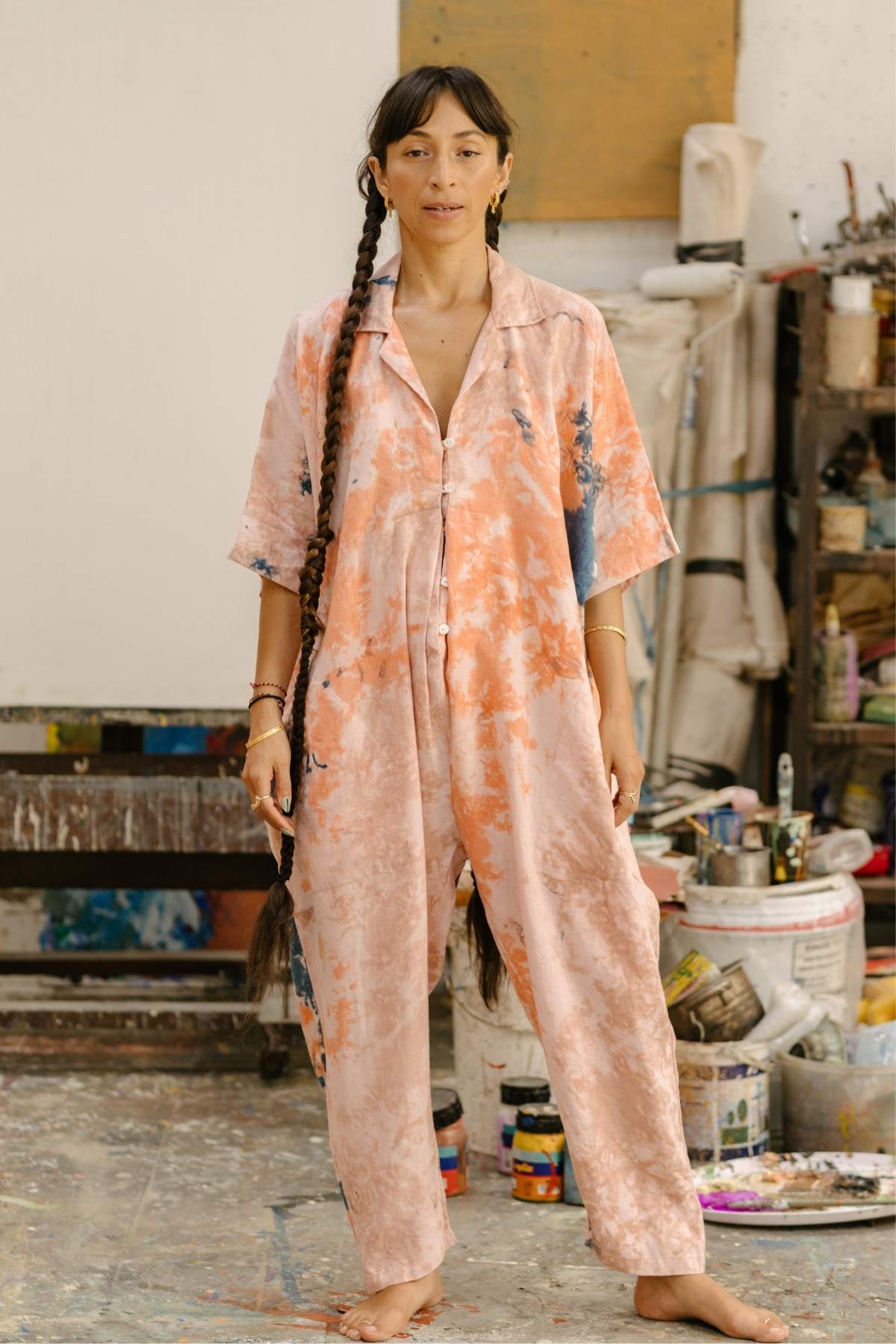
Then there is batch size. Making forty of something loses every efficiency that making forty thousand gains. And for our botanical colourways there is time: five to seven days in the dye before a single seam is sewn.
Where the money actually goes
Roughly, and in order of size, for a garment in the $118 to $490 range we work in.
| Cost | Why it is what it is | Can it be reduced |
|---|---|---|
| The wage | A living wage paid directly to the maker, not a legal minimum | Only by paying someone less |
| The cloth | Certified European flax, wet spun, from a region with no cheap alternative | Only by dropping to a blend |
| Batch size | Tens, not tens of thousands. No volume efficiency at any stage | Only by mass producing |
| Dye time | Five to seven days for botanical colourways before construction | Only by using synthetic dye |
| Brand margin | Real, and smaller than most people assume on made-to-order | Yes, and it is the first thing we cut |
Every row in that table is a decision rather than an accident. Which is the honest way to read any garment's price: not as a number, but as a list of choices someone made about who absorbs the cost.
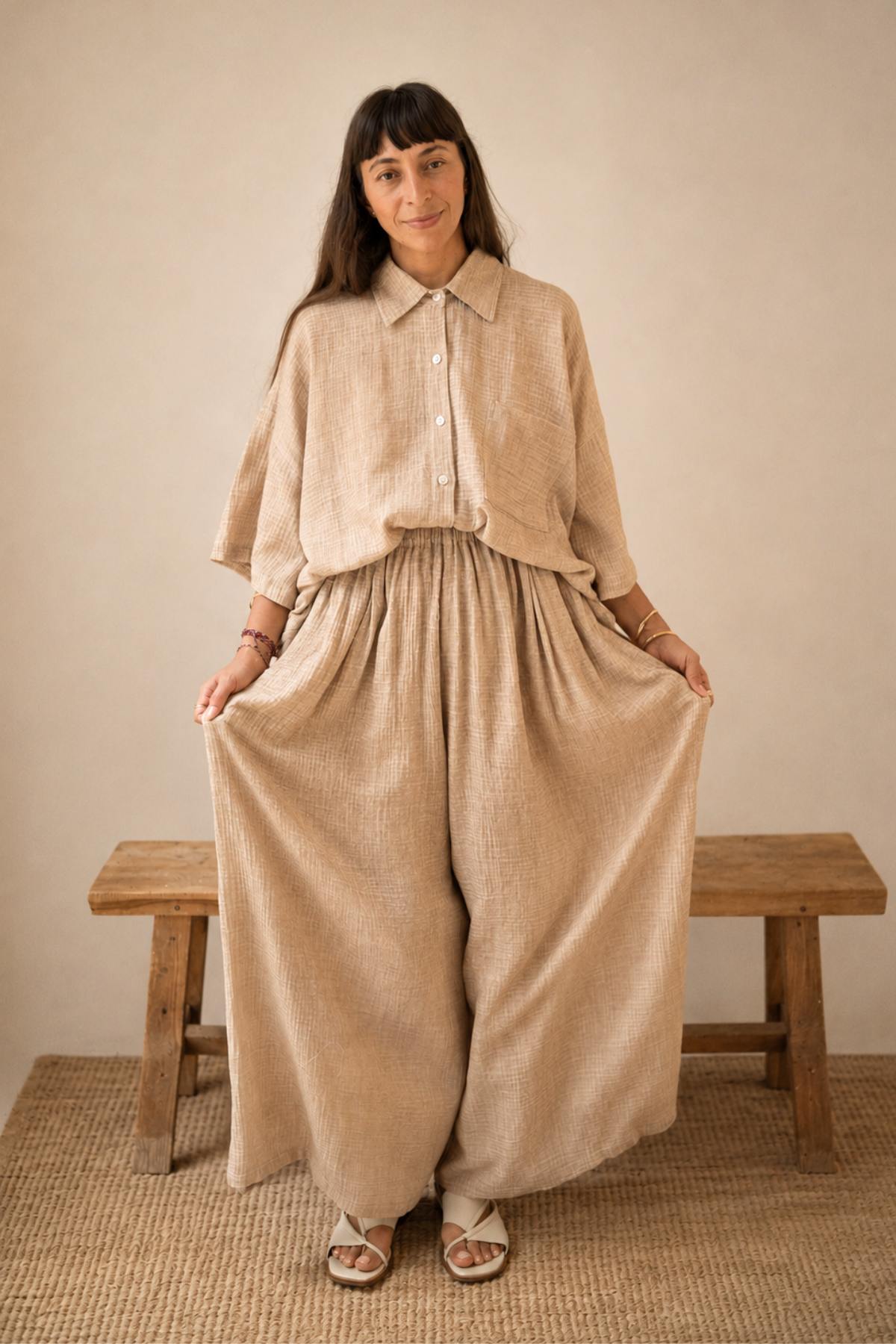
Button-down and wide-leg trouser in French linen, stonewashed before it ships so the softness you feel on day one is the softness it keeps. Both halves work apart, which is most of why it earns its price.
Shop the Suka Set →Is linen worth the price
Per garment, it costs more. Per year of wear, usually not, and the reason is in the fibre itself. Linen is two to three times stronger than cotton, and unlike almost every synthetic it improves with washing rather than degrading. A linen piece worn for six years costs less per wearing than four years of replacing a cheap dress, and it looks better in year six than it did in year one.
The honest caveat is that linen asks for the money upfront, which is a real barrier and not one to wave away. The arithmetic only works if you actually wear the thing. Which is why we would rather sell you one piece you reach for constantly than three you admire in the wardrobe.
If you want to see how the fabric behaves in practice before spending anything, our piece on whether linen shrinks covers the part most people worry about, and the linen collection is where ours lives.
Frequently asked questions
Why is linen more expensive than cotton?
Because flax takes more steps and more time at every stage. It is pulled rather than cut to preserve fibre length, it must be retted, which means controlled rotting judged by eye over days or weeks, then scutched and hackled before it can be spun. The yarn is wet spun, which runs slower than the dry spinning used for cotton and needs different machinery, so fewer mills can produce it. More than 80% of high-quality flax is grown in a narrow band of Western Europe, so unlike cotton there is no cheap alternative origin to switch to.
How much should a good linen garment cost?
Broadly $118 to $490 for a well-made piece from a brand paying a living wage, which is the range we work in. Below roughly $60 for a linen dress, be curious: either the fabric is a blend, the flax is not European, or someone in the chain is absorbing a cost they did not agree to. Ask for the fibre composition and the certification. A brand that means it will answer both without being pushed.
Is expensive linen actually better quality?
Not automatically, and price alone is a poor signal. What to check instead: whether the composition is 100% linen or a blend, whether the flax carries European Flax or Masters of Linen traceability, whether the finished cloth holds OEKO-TEX Standard 100, and whether the piece has been stonewashed or pre-washed before sale. Those four answers tell you far more than the number on the tag.
Why is linen so expensive when flax grows easily?
Flax does grow readily, and that is not where the cost sits. The expense is in processing. Retting, scutching and hackling are slow, partly manual, and easy to ruin, and wet spinning is slower than cotton spinning. The plant is cheap. Turning it into thread is not.
Does the price of linen include the maker's wage?
It should, and it very often does not. For ethically made clothing the wage is usually the single largest cost, larger than the fabric. When a linen garment is unusually cheap, that is the line most likely to have been cut, because it is the only one with a person at the end of it who cannot refuse. Ask the brand directly what its makers are paid and who set the figure.
With love from Bali,
Myrah
|
A Piece for This Threshold The Linen Collection Shop the Linen Collection → |

|
The Muse-Letter Dress for the woman you’re becoming. Join the Muse-LetterUnsubscribe any time. No spam, ever. |
















Dejar un comentario
Este sitio está protegido por hCaptcha y se aplican la Política de privacidad de hCaptcha y los Términos del servicio.